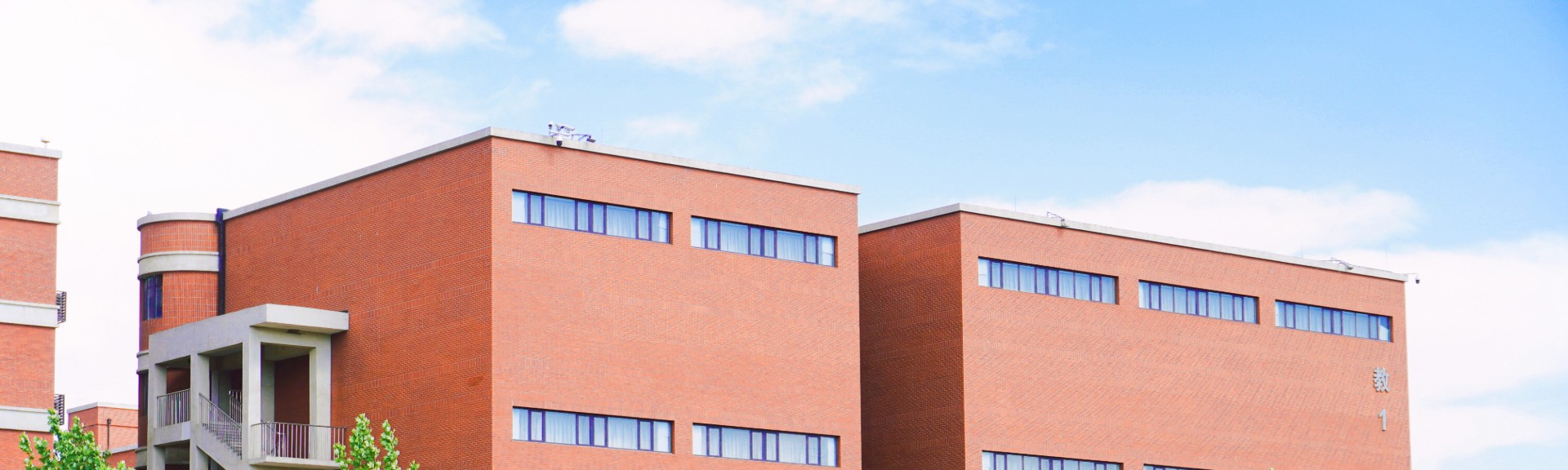
To further enhance the scientific research capabilities and teaching skills of young faculty members and promote the deep integration of artificial intelligence with education and teaching, the School of Artificial Intelligence held a teaching skills enhancement salon in Room 1410 of the Yifu Building on the afternoon of September 19. The event was hosted by Vice Dean Gao Wenchao, who is responsible for teaching affairs.
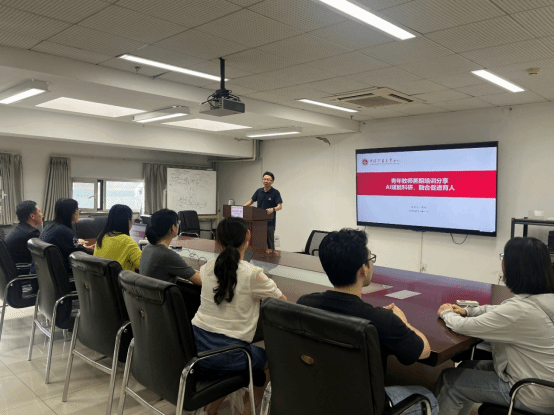
Themed “AI Empowers Teaching and Scientific Research,” the salon featured a special report by young faculty member Zhang Qi. Zhang Qi had attended the “Summer Training Camp for Enhancing Young University Faculty’s Scientific Research Capability,” jointly organized by the National Center for Higher Education Faculty Development and the Liaoning Provincial Higher Education Faculty Training Center, in Shenyang at the end of July. During the salon, Zhang Qi delivered a presentation titled “Artificial Intelligence + Teaching, Research, and Management,” systematically introducing the training camp’s curriculum. He highlighted key modules such as “Large Language Models Assisting Research Management,” “Applications of Generative AI in Research Project Design and Academic Writing,” and “Practical Pathways for Integrating Research and Education,” while also sharing his personal learning insights and future work plans.
Zhang Qi emphasized that young faculty should proactively adapt to the rapid development of artificial intelligence, utilize AI tools scientifically and normatively, and enhance both research efficiency and teaching quality. He suggested that the school could introduce research cases into undergraduate courses and advance undergraduate research training programs to organically connect course content with scientific research outcomes, thereby fostering students’ innovative capabilities.
During the discussion session, participating faculty engaged in lively exchanges on topics such as “Optimizing Research Processes with Large Language Models” and “The Role and Boundaries of Generative AI in Formulating Scientific Hypotheses.” Drawing from their own teaching and research experiences, they delved into issues related to technology application scenarios, risk mitigation, and policy regulations, creating a vibrant atmosphere of discussion.
In his concluding remarks, Gao Wenchao emphasized that the school will continue to build a “training-transformation-sharing” platform for young faculty, promoting the deep integration of AI technology with teaching and research. He stressed the importance of translating learning outcomes into tangible results in talent cultivation and scientific research innovation, thereby driving the school’s high-quality development to new heights.

 School Home